
Meet our fearless tour guide,
Paulo Mota.
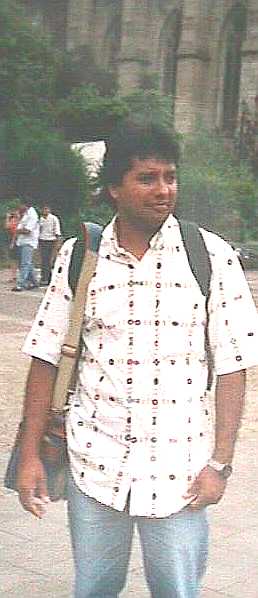
Paulo, whose mission in life is to help kids in Sao Paulo, took it upon himself to give us a grand tour of the city and what he does here. We decided we could trust him to take us to safe places. We took Tiffany (Jimenez) with us; at 5 months you can put a baby in a sling and carry him all over the place. You can’t do that with a 2 1/2 year old and that’s why we left Tannah with Grandparents in Nebraska!
It began to a trip downtown where we saw the city’s central square.Paulo met his wife, Ireni, while they were both working with street kids there. Paulo tookus into a humongous Catholic Church that’s right next to the water fountains and statues etc., then took us to the observatory in a tall building so we could have a good look at the whole city.
Culinary Delight For $7
Paulo took us to a restaurant that could best be described as a Brazilian Meat Buffet. For $7 you help yourself to a banquet of assorted native foods (all very good) and every 5 minutes, a waiter shows up at your table with a 2′ long skewer of some exotically spiced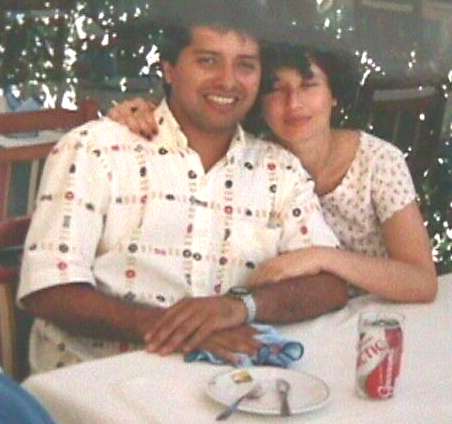
meat and offers to slice off a hunk of it and pile it on your plate. They served every imaginable kind of meat, and let me tell you what, these guys have cornered the market on spicy meat. This stuff was awesome! I think I got enough protein to last me through April.
We had exotic fruit juices to drink, delicious pastries and desserts. The restaurant had a large white sunlit interior with beautiful paintings on the walls. When we were done, the owner took us on a tour of the kitchen area and we saw how they roast the meats in their own juices. We were impressed at how clean and spacious it was. Paulo explained to us that the waiters come mostly from South Brazil, where cooking meat this way is a tradition.
After that Paulo took us to see what he does every day, and who he works with. His passion is for the children and teenagers that live in the favellas, or slums, of Sao Paulo. We went to meet some of those kids.
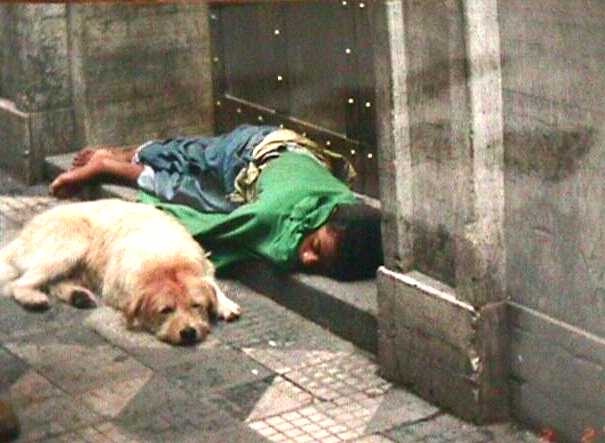 Not an uncommon scene in Sao Paulo: Near the center of Downtown, across the street from an AlphaGraphics copy shop at 10:30 am on a Tuesday morning, a homeless boy, perhaps 10 years old, sleeps in a doorway with his dog.
There are about 500,000 homeless street kids in Brazil like this boy. They are considered a nuisance by most people, and live in a desperate, violent world of hunger, prostitution and drugs.
Several years ago, Brazil’s equivalent of Time Magazine published an expose on the street kid problem, and the government, embarrassed by the publicity, decided to take action. Their solution: Police officers were sent out to shoot them.
Paulo originally started working with street kids, looking for ways to put them in safe homes or orphanages and get them off drugs. But Paulo explains that once kids have been on the streets for a year or two, they have becomes so unloved, so hardened, so distrusting, and so enmeshed in the reality of surviving on the streets, that it is very difficult to redeem them from that lifestyle.
So he turned his attention to kids who weren’t homeless, but who were at risk. An ounce of prevention is worth a pound of cure, as they say. His ministry with these kids is powerful and is making a real difference for real kids, who won’t end up like the boy you see in this picture because Paulo cares.